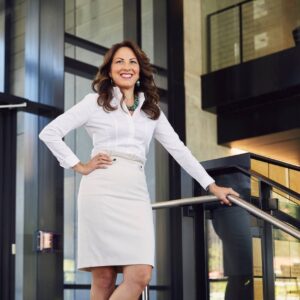
 For C-DIAS Fellow Natasha Ludwig-Barron, PhD, research is deeply personal. A first-generation college student raised in Los Angeles by a single mother, Natasha’s path into epidemiology was shaped by her family’s history with addiction and her conviction that health is a matter of human rights. “At my core,” she said, “I’m a human rights activist. I want to see programs reaching the communities that need them most.”
Her journey to that mission was anything but linear. After beginning her career in cancer prevention among Latino and African American communities, Natasha earned her MPH at Emory University, focusing on health education and policy. She went on to work at UC San Diego along the California–Mexico border, studying the intersections of HIV, substance use, and gender inequality. “I started to see myself in academia,” she recalled, “but I wasn’t very confident.” Seeking to strengthen her skills, she joined the Los Angeles County Department of Public Health, leading large studies using HIV and insurance databases to inform local health policy.
A quote from then-CDC Director Dr. Thomas Frieden proved pivotal: “Tell me where a person lives, and I’ll tell you their health outcomes.” That insight reframed her thinking. Natasha pursued her PhD at the University of Washington, where she worked in Kenya with people who inject drugs living with HIV. There, she honed her expertise in geospatial and machine-learning methods—skills she later applied to COVID-era health workforce studies at the UW Latino Center for Health. “It was the first time I worked on research that directly informed policy,” she said. “It changed everything for me.”
Now at UCSF, Natasha focuses on substance use and hepatitis C treatment along the Texas–Mexico border, partnering with the region’s sole harm reduction organization, Programa Compañeros, who serves roughly 10,000 people with substance use disorders in Ciudad Juárez, Mexico. Her pilot studies have uncovered a stark mismatch: high rates of hepatitis C infection amid a state-of-the-art clinic stocked with treatments that few can access due to systemic barriers.
In 2024, Natasha was awarded a K01 Career Development Award, supporting her three-part research program: integrating peer navigators into clinical settings, conducting phylogenetic analyses to trace transmission dynamics, and running a pilot trial to test new care approaches. Her next step is deepening her foundation in implementation science, which she sees as the key to turning evidence into impact. “I feel like I’m at the bottom of the mountain,” she admitted, “but I’m surrounded by an incredible group of mentors—and I know persistence and community will get us there.”
Outside of academia, Natasha is a proud mother, partner, and Chicana scholar committed to bridging divides between research and real-world change. “This work,” she said, “is about creating programs that truly serve people—wherever they live.”