Supporting Compassionate Addiction Care During Pregnancy and Postpartum
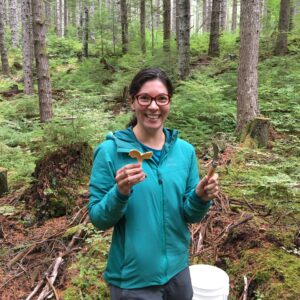
Dr. Ximena Levander has built her career at the intersection of addiction medicine and women’s health, focusing on perinatal substance use disorders—when pregnancy, parenting and recovery overlap.
“When you’re engaging in care around perinatal substance use disorder, you’re not only caring for one patient,” she says. “You’re caring for a family unit.” For Levander, the work represents an opportunity to help break intergenerational cycles of trauma. “Many patients I work with grew up with parents who used substances or were involved with child protective services,” she explains. “When we intervene with compassion and support, we can help disrupt that pattern.”
Becoming a parent herself deepened her understanding. “I benefited from both birth and postpartum doulas,” she says. “I remember thinking—this should be available to everyone, especially people with substance use disorders who could benefit from consistent, nonjudgmental support.”
Now an assistant professor at Oregon Health & Science University, Levander leads a K12 project that integrates and evaluates peer recovery specialists trained as community doulas to support pregnant and postpartum people with substance use disorders. The project builds on her experience with OHSU’s inpatient addiction consult service, where peers with lived experience play a vital role. “Seeing how they connect with patients has been incredibly inspiring,” she says. “We’re exploring how similar peer-based models could extend into perinatal care.”
As a C-DIAS fellow, Levander applies implementation science frameworks to strengthen her work. “The fellowship has helped me think more intentionally about pre-implementation strategies and sustainment from the start,” she says. “We often launch programs with enthusiasm but no long-term plan for integration or funding. I want to design interventions that fit within institutional and community culture so they can last.”
Her definition of success centers on alignment—with community needs, organizational mission and patient experience. “Success means developing something that patients, clinicians and leadership all see as beneficial,” she says. “Something that fills a real gap in services.”
That philosophy also shapes her approach to community engagement. “Authentic engagement starts with listening,” she says. “If I walk in saying, ‘This is what we’re going to do,’ it won’t work. People in the community know what they need. Building trust takes time—and you have to be there for the long term.”
Levander is also part of the Oregon Perinatal Collaborative, which develops statewide tools to improve care for pregnant and postpartum people with substance use disorders. “It’s part of the larger community effort to advance care,” she says.
Outside of medicine, Levander finds perspective in the Oregon forests, where she and her partner forage for wild mushrooms. “It’s a way to reconnect with the land after so much time at a desk,” she says. “You’re scanning the forest floor for something that doesn’t quite fit—like a flash of color or a shift in texture. It changes how you see the world.”
Inspired by “Berry Song,” her daughter’s favorite book by an Indigenous author from Alaska, Levander reflects on foraging as a lesson in connection. “It’s about recognizing how we’re all interconnected—people, families and our environment,” she says. “Even small traditions can remind us of deep truths about community and belonging.”