C-DIAS Fellow Will Garneau, MD, MPH, came to resea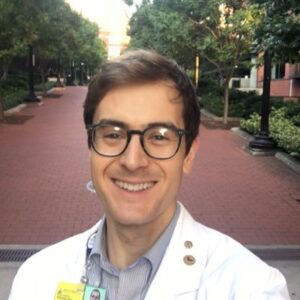 rch through the front lines of clinical care. Originally trained as a hospitalist, Will found his path shifting during the COVID-19 pandemic, when he began observing unusual patient outcomes in the ICU. Encouraged by a colleague to write a case series, he discovered the power of research to shed light on pressing health challenges. “I didn’t see myself as a researcher at first,” he admitted, “but I thought, hey, I can be a researcher too”.
That realization set him on a new trajectory: addiction medicine and research. Based in Baltimore, where opioid use disorder (OUD) has reached unprecedented levels, Will now studies how to improve hospital care for patients with OUD. His work focuses on hospital discharges against medical advice, a phenomenon that affects 10–20% of hospitalized patients with OUD—nearly 20 times higher than other populations. Many leave without receiving the care they need due to institutional barriers. As Will put it: “It’s because of untreated withdrawal, stigma—it’s all these different things. How do we improve care in the hospital?” He argues that withdrawal should be treated with the same urgency as a stroke or heart attack, reframing it as a true medical emergency.
At the heart of his research is the use of real-world hospital data to better understand and address provider decision-making. By applying frameworks such as the Theoretical Domains Framework, Will is analyzing how prescribing practices and clinical responses can shift to reduce disparities and improve care. “My work is basically about understanding the factors in the hospital—why providers aren’t doing the things. That’s where implementation science comes in,” he explained.
Outside of work, Will loves seeing stand up comedy. He has traveled to several stand up comedy festivals and particularly enjoys visiting The Comedy Store in Los Angeles.