 If you ask Dr. Enya Vroom what makes her unique, she might skip the professional milestones and offer something lighter: she, her sister, and her brother all share the same birthday — same day, different years. “We’re not triplets,” she’ll assure you. “Just a statistical anomaly.”
Vroom’s path into substance use research began with a PhD in behavioral and community sciences, followed by a NIDA-funded postdoctoral fellowship focused on opioid misuse among justice-involved adolescents. That early work sharpened her understanding of a reality the field continues to confront: we don’t just have a treatment gap — we have an implementation gap. Evidence-based treatments exist, yet far too often they don’t reach the people or communities who need them most.
Today, she is an assistant professor at the University of Texas Health San Antonio with appointments at the Center for Research to Advance Community Health and the Be Well Institute on Substance Use & Related Disorders. Her research focuses on improving how substance use treatment and recovery services are adopted and sustained in real-world settings. “My work centers on improving adoption and implementation in community settings,” she explains, “and I use mixed methods and community-engaged approaches to make sure the voices of stakeholders guide the direction.”
That commitment shows up clearly in her research portfolio.
In one recent study, she and her team examined readiness and demand for medication treatment for stimulant use disorder among both treatment providers and individuals with lived experience. Participants pointed to familiar challenges — stigma, low engagement, limited provider training, and structural barriers to access. Still, there was optimism. Providers expressed support for medications as long as implementation included meaningful support for clinics and staff. The takeaway was clear: innovation alone isn’t enough — implementation must be deliberate, tailored, and supported.
That study now anchors what comes next. Vroom recently submitted an R34 application to co-develop and pilot a multi-component implementation strategy focused on improving patient-centered care for methamphetamine use disorder. The emphasis on co-production isn’t incidental — it reflects her belief that solutions must be built with communities, not delivered to them.
Her work also extends beyond clinical settings. In a one-year ethnographic project examining recovery support services in Texas, she documented meaningful regional variation. Recovery resources have grown significantly across the state, but gaps persist — particularly in rural regions such as West Texas and the Rio Grande Valley. Organizations voiced strong support for equitable quality improvement models but also concerns about burden, sustainability, and losing sight of relationships — the backbone of recovery communities. The message was consistent: change must strengthen connection, not displace it.
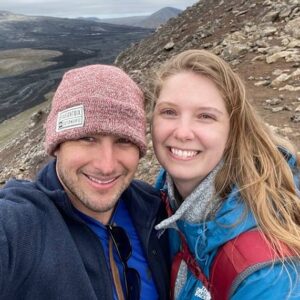
Outside her work, Vroom is drawn to big landscapes and big experiences — including a bucket-list trek to Everest Base Camp. When she’s home, she spends time with her cat, Clark, who she jokes may genuinely believe he runs her research program.
Reflecting on where she is now, she calls this moment a turning point — the stage where years of preparation meet momentum. “This fellowship is helping me sharpen my skills in innovative implementation science approaches and build a competitive NIH research portfolio focused on improving access to treatment and recovery services nationwide,” she says. “It’s exciting — and meaningful — to be shaping work that can move evidence into action.”
Her trajectory underscores a simple truth: solving substance use challenges requires more than developing interventions — it requires ensuring they make it into practice, in ways that honor context, relationships, and lived experience. That’s the work Vroom has committed her career to — bridging the space between what we know and what communities receive.