Championing Better Care for Families Affected by Substance Use
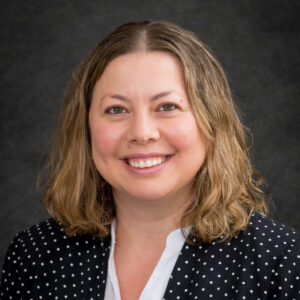 A tennis scholarship first brought Ekaterina Burduli to Washington State University, but it was the people and communities she found there that made her stay. From her undergraduate degree through her master’s, her PhD, and eventually a faculty position at WSU’s Elson S. Floyd College of Medicine, she has spent her career growing alongside the university and the state she calls home.
“It’s all about relationships,” Burduli says in regards to what kept her rooted there. “The relationships I’ve built with families, clinicians, and community organizations all across Washington have really shaped my work.”
That work centers on one of the most stigmatized intersections in medicine: substance use during pregnancy. Burduli studies how to improve care and outcomes for pregnant and postpartum women with substance use disorders, while focusing on the health and development of their infants. It is a population, she says, that is routinely misunderstood.
“People often mistake substance use disorders in perinatal women for lack of commitment to a child, or see it as a moral failing, a choice. But we know that substance use disorder is a chronic, treatable health condition,” Burduli says.
Pregnancy, she argues, can be a crucial turning point. What gets in the way is stigma.
Burduli’s research treats the mother and infant together rather than as separate patients, an approach rooted in a phrase she returns to often: the mother is the medicine. When a parent has access to housing, psychosocial support and treatment, the infant benefits directly. When those supports are absent, both suffer.
The fentanyl crisis has made that work more urgent, and provider stigma adds another layer. Drawing from patients’ own accounts, Burduli’s research shows that stigma surfaces in assumptions about parenting ability, in judgmental language, and in care that feels punitive rather than supportive.
“That stigma has actual consequences,” she says. “It could delay care and really deepen that mistrust, at a time when support matters more than ever.”
The C-DIAS Fellowship shifted how Burduli approaches her work, moving her focus beyond designing interventions to asking what strategies and partnerships are needed to make change happen in the real world.
“It was such a great experience, and I’m sad it’s over. It really changed and strengthened how I think about moving my research into practice,” she says.
The fellowship also connected her with colleagues and mentors, sparked a grant collaboration with C-DIAS Fellow Berkeley Franz, and led her to develop an undergraduate implementation science course at WSU she would have never dreamt of before.
Her hope is that in the future, families navigating substance use will be met with compassion rather than judgement, and that treatment becomes part of routine care rather than a separate, stigmatized system.
When she is not working, Burduli spends time outside with her husband, 10-year-old son, and 5-year-old daughter, walking the dog, bike riding, and taking full advantage of the Pacific Northwest. She still plays tennis when her schedule allows and has recently taken up pickleball.