Reclaiming Indigenous Science in Western Health Systems
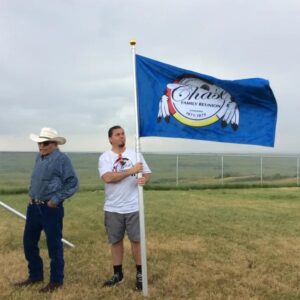
For Damian Chase-Begay, PhD, MS (Mandan/Arikara), public health was shaped early by family, community, and lived experience. Born in Missoula, Montana, his path traces back to the 1960s, when his grandmother came to the University of Montana on a tribal scholarship, earned a degree in nutrition, and went on to become a nurse serving Native communities. Exposure to Indian Health systems was part of daily life. “There wasn’t a moment where I decided this is what I’d do,” he says. “It was always there.”
Today, Chase-Begay is an associate professor of social epidemiology and Indigenous health at the University of Montana. His work examines how social environments influence health, particularly in Indigenous communities that have sustained well-being for generations through traditional medicines, ceremonies, and whole-person approaches.
Rather than treating culture as an add-on to evidence-based care, Chase-Begay challenges that premise. Indigenous communities do not need culture added to Western systems to feel comfortable. Western systems need to recover tools they have ignored or dismissed. “Traditional healing practices are tools,” he explains. “So are pharmacology and clinical medicine. You can’t build a house with just a hammer.”
That perspective underpins his NIH-funded research. In July 2024, Chase-Begay received a NIDA K01 career development award in implementation science to adapt an evidence-based substance use prevention intervention for urban Indigenous young adults in Montana. The project integrates traditional ceremonial practices and uses a hybrid type 2 implementation-effectiveness trial to examine both outcomes and real-world implementation.
He is also a Robert Wood Johnson Foundation Health Equity Scholar for Action, studying how Indigenous Research Methodologies operate within Western academic systems. Indigenous science can look unfamiliar to reviewers or resemble Western methods closely. For Chase-Begay, the difference lies in process, authority and accountability to community.
Building and sustaining trust remains one of the hardest parts of this work. Research has often harmed Native communities through extraction and misrepresentation, making buy-in fragile and never guaranteed. “It would not take much for that trust to disappear,” he says.
Chase-Begay points to his time at the Native American Health Center in the Bay Area as an example of culturally grounded care in practice. While overseeing cultural services, he helped integrate traditional practitioners into clinical settings. In one case, a young woman recovering from a gunshot wound experienced meaningful improvement after participating in a traditional Lakota ceremony focused on grief and healing, allowing her physical recovery to progress more rapidly.
Chase-Begay joined the C-DIAS Fellowship in Addiction Implementation Science to strengthen his implementation science training and support the translation of culturally grounded interventions into real-world systems, particularly for underserved urban Indigenous communities.
Outside of work, family keeps him grounded. He spends his time with his husband, their teenage son and extended family across Montana and North Dakota. His academic path was nontraditional. He completed his bachelor’s degree at 38 and earned his PhD at 44.
At the core of his work is a clear conviction. Health systems do not need to choose between Indigenous knowledge and Western science. They need the discipline to use both well.