Bringing Addiction Care Beyond the Clinic
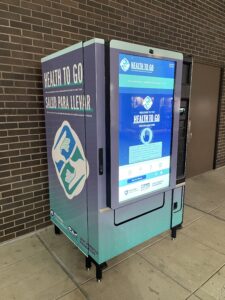
What if getting addiction care supplies were as simple as using a vending machine?
For Alice Zhang, MD, MPH, that question is not theoretical. It’s the starting point for her work. Through a vending machine project that provides around-the-clock access to supplies like naloxone, drug checking tools and other essentials, she is rethinking how addiction care can reach people who may never walk into a clinic. The idea gained traction during the COVID-19 pandemic, when access to services became more limited, but it has continued because it addresses a more fundamental problem: how to make support available in ways that fit into people’s lives.
At first glance, the concept seems straightforward. Stock the machine, keep it running and let people access what they need. In practice, it has been far more complex. What should go inside? Who maintains it? Who takes responsibility over time? Even with strong support, the work depends on people willing to take ownership. The machines are stocked with a mix of items meant to reduce risk and support daily needs, including naloxone, fentanyl test strips, wound care supplies like bandages and first aid items, as well as everyday essentials such as socks, toothbrushes, toothpaste and menstrual products. That mix has revealed needs that are easy to overlook. Some of the most frequently used items are not what people might expect, but basic necessities, pointing to gaps that extend beyond clinical care.
That work reflects a broader question that has shaped Dr. Zhang’s path: if medicine has effective solutions for addiction, why don’t they reach everyone? Coming to medicine through global health, she was drawn to the reality that many conditions have treatments that work, but those treatments don’t always reach the people who need them. That question became real during medical school in Baltimore, where she saw how widespread addiction was across communities, alongside how powerful treatment could be when it was accessible. “You can see the transformation that occurs,” she says. “Not only for the patient, but for their family and everything around them.”
So what happens to the people who never make it into care? That question stayed with her. In clinic, she found herself thinking not just about the patients she was seeing, but about those she wasn’t. From there, she became interested in approaches that focus on reducing risk and supporting people wherever they are, especially outside traditional clinical settings. Her work now reflects that shift, using implementation science to close the gap between what works and what is actually accessible. “That’s the beauty of implementation science,” she says. “Being able to take something that we know works and make it accessible in real-world settings.”
Across her work, Dr. Zhang emphasizes listening and letting community partners lead. What does meaningful partnership actually look like? In her view, it’s when she isn’t the one doing most of the talking. “The best meetings are honestly the ones where I’m not talking,” she says. “Just listening to how they want to move forward and what they need.” That mindset also shapes how she defines success. Data and sustainability matter, but they come after a more immediate question: is this actually useful to the people it’s meant to support?
Looking ahead, she expects addiction care to continue moving beyond clinic walls and into more community-based settings, including mobile and street-based care. Through projects like the vending machines, she is focused on making support more accessible in the places people already are. Outside of work, she finds balance in quieter routines, including gardening in central Pennsylvania and spending time with her young child — both of which offer a way to step back and stay grounded.
In the end, her work comes back to a simple idea: not just building solutions, but making sure they show up where they’re needed.