A Systems View of Addiction Treatment Access
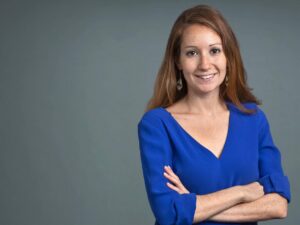 Noa Krawczyk’s path into addiction research began with an early interest in public health and the systems that shape access to care.
As an undergraduate studying biology, she found herself drawn toward questions about drug policy and substance use. Courses on U.S. drug policy and global drug markets pointed her in that direction, but it was her volunteer work in Brazil, supporting people experiencing housing instability and substance use, that made the issue real. “I started getting exposed to the treatment system, or lack thereof,” she recalls.
She later returned to Brazil through a Fulbright Fellowship to study health services among people who use crack cocaine. That experience solidified her focus on addiction and health systems and led her to pursue a PhD at Johns Hopkins University.
Early in her career, her research focused on individual-level barriers to treatment. Over time, that perspective shifted.
“I think most of the reasons people don’t or can’t access services are more structural,” she says.
That shift brought her into implementation science, where the focus moves beyond identifying effective treatments to understanding how they are delivered, adopted and sustained in real-world settings. As a fellow in the C-DIAS Fellowship Program, Krawczyk has deepened this approach, working alongside researchers and mentors to examine how policy, health systems and clinical practice shape access to care.
Through the fellowship, her work has focused on how evidence-based treatments for opioid use disorder are implemented across complex systems, particularly within health care and criminal legal settings. The experience has reinforced a core insight: the gap is rarely about whether treatments work, but whether systems are designed to support their use.
Methadone is a clear example. It is one of the most effective treatments for opioid use disorder, yet in the United States it remains one of the most tightly restricted. It can only be dispensed through federally regulated opioid treatment programs, which are difficult to establish and unevenly distributed. For many patients, particularly those in rural areas or institutional settings, access simply does not exist.
“The issue is really how these treatments are regulated,” she explains.
Even when treatment is available, the structure of care can work against the people it is meant to serve. Daily travel requirements, rigid program rules and limited flexibility can make it difficult to stay engaged, especially for those balancing housing, work or family responsibilities.
These challenges become even more pronounced during transitions, such as moving from a hospital or jail back into the community.
“There’s not one thing that makes people engage or not engage,” Krawczyk says. “People have a lot going on in their lives outside of their substance use.”
In those moments, treatment is just one of many competing priorities. Without additional support, it can quickly fall off. Improving continuity of care through navigation support, transportation and stronger provider relationships can help, but her work points to a larger issue. Systems themselves are often too complex and fragmented to support sustained engagement.
Within implementation science, Krawczyk is particularly focused on how policies are translated into practice. Recent regulatory changes around medications for opioid use disorder have created new opportunities, but also new uncertainties.
“We don’t even know how the new regulations are being taken up,” she notes.
Through her work and her experience in C-DIAS, she is examining how these changes are adopted across states, health systems and providers, and whether they are actually improving outcomes for patients. This includes identifying implementation strategies at multiple levels, from state policy decisions to provider training and clinical workflows.
At the same time, she is candid about the field’s limitations.
“We’ve spent way too much time just documenting disparities and not doing anything about it,” she says.
Her work reflects a growing push within implementation science to move beyond description toward action, building partnerships with policymakers and health systems, and contributing to real-world change rather than relying on publication alone.
Outside of her work, she makes a point to step away from the screen. Time with friends and family, staying active and taking care of her plants offer a counterbalance to research that often sits at the intersection of policy, systems and human need.